Odin: The God of Wisdom and War
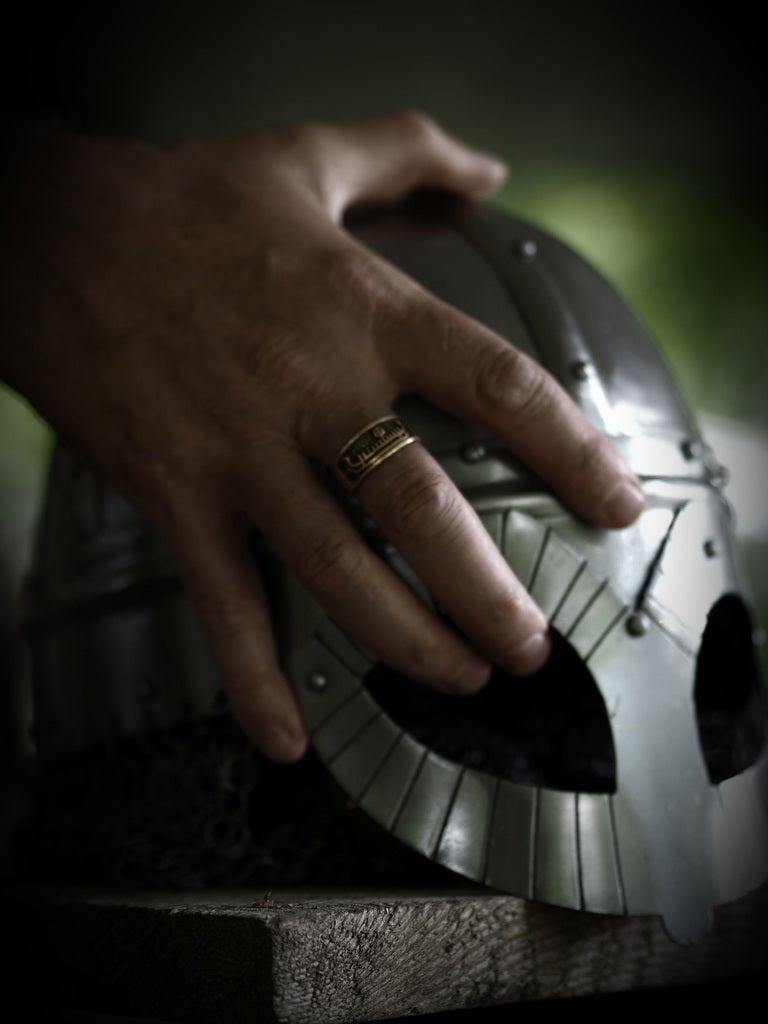
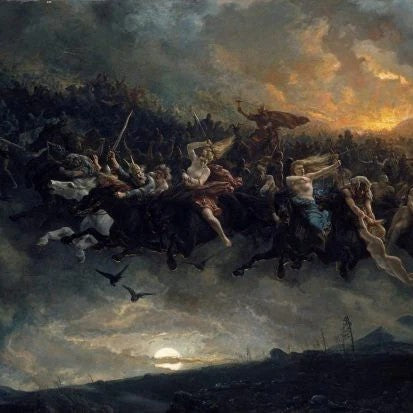
Odin is one of the most significant gods in Norse mythology. He is also known as "Allfather" and is considered the leader of the Aesir gods. Odin is married to Frigg and has several children, including Thor and Balder. He is strongly associated with wisdom, poetry, war, and death. Odin sacrificed one of his eyes to drink from the well of wisdom to be able to see all that happens in the world and owns the ravens Hugin and Munin, which represent thought and memory.
He also has Sleipnir, the eight-legged horse that can run through all worlds.
The Wolves Gere and Freke. Before men were given life and before Odin's two
ravens were Freke and Gere.
Odin created two legendary wolves, a female
and a male, to keep him company
Asgard and to protect Midgard. These two wolves populated the world in
his journeys with Odin.
Gere and Freke should not be confused with
Skoll and Hati, who are descendants of the
the feared Fenrir, son of Loki.
Thor: The God of Thunder
Thor, Odin's son with the giantess Jörd, is the god of thunder and the bow. He is known for his strength and his iconic weapon, the hammer Mjölnir, which is a symbol of protection and power. Thor protects both gods and humans from giants and other threatening beings. He is married to Sif, known for her golden hair, which symbolizes harvest and fertility. His chariot is drawn by the two goats Tanngnjóstr and Tanngrisnir.
Frigg: The Goddess of Motherhood and Home
Frigg is Odin's wife and the queen of the heavens. She is the goddess of motherhood, family, and home. Frigg is also known for her ability to see into the future, but she never reveals what she sees. Her role as the protector of the home and children makes her an important goddess in mythology.
Frigg is often associated with keys, which symbolize her role as the head of the household and family. In Norse culture, keys were a sign of power and responsibility, and carrying keys showed that one had the responsibility for the home. Through this, Frigg is linked to security, order, and protection.
Freyja: The Goddess of Love and Fertility
Freyja is one of the most well-known goddesses and belongs to the Vanir clan. She is the sister of Frey and the daughter of Njord. Freyja is the goddess of love, fertility, beauty, and war. She travels in a chariot drawn by cats and owns the necklace Brisingamen, a symbol of beauty and strength. Freyja is also associated with seidr, a form of magic. Her cats are nameless in the sagas, but they represent mystique and magic.
Loki: The Cunning Trickster God
Loki is a complex figure in Norse mythology. He is a giant who became part of the world of the Aesir gods and is known for his cunning, his playful nature, and his ability to transform. Loki is the father of several mythical beings, including Fenrir, the Midgard Serpent, and Hel. Although he often helps the gods, his actions frequently cause problems.
Balder: The God of Light and Purity
Balder is the son of Odin and Frigg and represents light, goodness, and purity. He is beloved by all gods and beings, but is tragically killed by his brother Höder, who is deceived by Loki. Balder's death marks the beginning of Ragnarök, the Norse apocalypse.
Vidar: The God of Vengeance
Vidar is one of Odin's sons and known as the god of vengeance and silence. He plays a central role in Ragnarök as he avenges his father by killing the Fenris wolf. Vidar is strongly associated with strength and endurance, and his shoes made of collected leather pieces make him invulnerable.
Heimdall: The Guardian of Bifrost
Heimdall is the guardian of Bifrost, the rainbow bridge that connects Asgard with Midgard. He has exceptionally sharp senses and can hear the grass growing and see at great distances. Heimdall blows the Gjallarhorn to warn the gods of danger, and he plays a crucial role during Ragnarök in his battle against Loki.
Idun: The Goddess of Youth
Idun is the goddess who guards the golden apples that keep the gods eternally young. She is married to the skald god Brage and symbolizes renewal and lifelong health. Idun's role in mythology is crucial, as without her apples, the gods would age and lose their strength.
The Norns: The Weavers of Fate
The Norns are three mythical beings who spin and weave the threads of fate. They are named Urd, Verdandi, and Skuld, representing the past, present, and future. They reside at the root of Yggdrasil by the well of fate and water the mighty tree to keep it alive. The Norns are crucial for the balance of the universe and determine the fate of every being, including the gods themselves.
Hnoss: The Goddess of Treasure
Hnoss is the daughter of Freja and Od, and she represents everything that is precious and loved. Her name means "treasure" or "jewel," and she symbolizes beauty and value.
Nanna: The Goddess of Love and Sorrow
Nanna is Balder's wife and mother to Forsete. She is a goddess of love and loyalty, but also of the sorrow that arises from loss. When Balder dies of grief, Nanna chooses to follow him into the realm of the dead, which reinforces her symbolism of eternal love and fidelity.
Ratatosk: The Messenger
Ratatosk is a squirrel that runs up and down the world tree Yggdrasil. He conveys messages between the eagle sitting at the top of the tree and Nidhögg, the dragon at its roots. Ratatosk represents communication and conflict creation, as he often exacerbates disputes between the two beings.
Hel: The Mistress of Death
Hel is the daughter of Loki and Angerboda and rules over the realm of the dead, Helheim, where those who die from illness or old age end up. She is described as half alive and half dead, with a body that is half beautiful and half decayed. Hel symbolizes the inevitability of death and the balance that exists between life and death.
Nagelfar: The Ship of the Dead
Nagelfar is the mythical ship said to be built from the nails of the dead. The ship plays a central role during Ragnarök, as it sails with Loki and his entourage of giants to fight against the gods. Nagelfar symbolizes doom and the dark side of change and renewal.
Animals and things associated with the gods
Odin: The ravens Hugin and Munin (thought and memory), the wolves Gere and Freke, and Sleipnir, his eight-legged horse.
Thor: The goats Tanngnjóstr and Tanngrisnir, who pull his chariot.
Freja: Cats that pull her chariot.
Heimdall: No specific animal companion, but his connection to light and vigilance can be associated with the symbolism of the sun.
Loki: Not directly associated with animals, but he can transform into various animals.
Idun: Apples and connection to trees and nature.
-------------------------------------------------------------------------------
A glossary of Norse mythology: gods, beings, places, and objects.
A
Ae, a man mentioned in the Edda poem Rigstula. Married to Edda. They are visited by Heimdall, who under the name Rig travels among humans. Nine months later, Edda gives birth to the son Träl, who gives rise to the thrall class.
Aldafader, another name for Odin.
Aldagaut, another name for Odin.
Elves, see elves.
Alfheim, the land of the elves.
Alfrik, one of the dwarves who forges the necklace Brisingamen for Freja.
Alfrödul, designation for both the sun and the chariot the goddess Sol drives.
Allfather, another name for Odin.
Allsvinn, one of the horses that pulls the sun across the sky vault. The name means "the very swift."
Allvis, the name of a dwarf, who through Thor's cunning is turned to stone.
Elves, supernatural beings with good craftsmanship skills. The description of elves varies, and they are regarded as everything from divine beings to evil creatures. Snorri's Edda distinguishes between light elves, who live in the sky, and dark elves, who live underground.
Amma, a human woman who gives rise to the farmers' lineage by bearing the son Karl with the god Rig.
Amsvartner, the sea of darkness. In this sea lies the isle Lyngve, where Fenriswolf is held captive.
Anar, the goddess Night's second husband, with whom she has the daughter Earth. The name means "the second."
Andlang, one of the heavens that make up the sky vault.
Andrimner, the cook who prepares the pork from the boar Särimner.
Andvaranaut, a ring in the dwarf Andvare's gold treasure.
Andvare, a dwarf who guards a gold treasure. Works as an artist in Dvalin's forge.
Angerboda, a giantess. Lover of Loki. Mother of Fenriswolf, Midgard's serpent, and the goddess of the underworld Hel. The name means "sorrow herald," i.e., "she who heralds grief." (Read more here.)
Arvaker, one of the horses that pulls the sun across the sky. The name means "morning early."
Aesir, Odin and his descendants. One of the most prominent god families, the other consists of the Vanir.
Asabrag, another name for Thor.
Asbro, another name for the bridge Bifrost.
Asgard, the fortress of the Aesir and their main dwelling.
Ask, the first human of male gender.
Aslög, daughter of Sigurd Fafnesbane, who has a very strange fate and becomes the wife of Ragnar Lodbrok.
Asynjor, female Aesir gods.
Atle, fairy king in the poetic Edda. Throws Gunnar Gjukesson into a snake pit when he refuses to reveal where he has hidden Sigurd Fafnesbane's gold treasure.
Aud, the goddess Night's son with her husband Nagelfare. The name means "space."
Auda, one of the disir. Associated with vegetation.
Audhumbla, see Ödhumla
Aurboda, a giantess residing in the mountains. Mother of Frey’s wife Gerd.
Aurgelmer, another name for the giant Ymir.
Aurvandil, remarkable mythical figure, whose frostbitten toe transforms into a star in the sky.
Aurvangalandet, the origin of the human race.
B
Baduhild, one of Mimer's daughters.
Balder, a god known for his beauty and wisdom. Son of Odin and Frigg. Loved by all except Loki, who through cunning ensures that Balder is killed. The name means "the lord" or "the shining one". (Read more here.)
Barre, see Barrö
Barrö, the grove where Frej and Gerd are wed.
Bauge, guardian of the mead of poetry. The name means "the bent one".
Baugregin, another name for Mimer. The name means "master of the gold rings".
Bejla, servant to Frej.
Bele, giant whom Frej kills with a deer horn. The name means "the howler".
Bergelmer, primordial giant from whom all giants of the frost giants' lineage descend.
Bergresar, a lineage of giants.
Berling, one of the dwarves who forges Freja's beautiful necklace Brisingamen.
Bestla, giantess. Mother to Odin, Vile, and Ve.
Biflinde, another name for Odin.
Bifrost, the rainbow, which forms a bridge into Asgard.
Bil, girl who follows the moon in its path across the sky.
Billing, the evening glow's elf.
Bilskirner, the god Thor's fortress, which is said to have 540 rooms.
Blodighadda, see Blodughadda.
Blodighove, Frej's horse.
Blodughadda, one of Aegir's daughters, who personifies one of the sea's nine waves. The name means "the one with bloody hair".
Bodn, one of the vessels where the poetic mead is stored.
Bodvild, see Bödvild
Bor, primordial being who together with the giantess Bestla has the sons Odin, Vile, and Ve. He himself is the son of Bure, whom the cow Ödhumla licked out of ice-covered stones in Ginnungagap.
Brage, god of poetry and eloquence. Married to Idun. The name means "the excellent one". (Read more here.)
Breidablick, Balder's beautiful dwelling.
Brisingamen, Freja's necklace. (Read more here.)
Brokk, son of the dwarves' prince Ivalde. Together with his brother Eitre, he forges the ring Draupner, the hammer Mjölner, and the boar Gullinburste.
Brynhild, a shield-maiden and according to some theories a valkyrie. Also the name of Gunnar Gjukesson's wife.
Bure, primordial being who comes to life when the cow Ödhumla licks him out of a frosty stone.
Byggvir, Frej's servant.
Byleist, Loki's brother. The name means "the lightning of the storm town".
Bylgja, one of Aegir's daughters, who personifies one of the sea's nine waves. The name means "wave."
Båra, one of Aegir's daughters, who personifies one of the sea's nine waves. The name means "great wave".
Bödvild, daughter of King Nidud. In the Völundarkvæði, it is told that she is seduced by Völund before he escapes from his captivity in King Nidud's smithy.
Böltorn, a giant. Possibly the father of Bestla. The name means "misfortune".
Bölverk, another name for Odin, used when he drinks the mead of poetry.
C
D
Dag, god who personifies daylight. Son of the goddess Night. (Read more here.)
Dain, one of the deer that graze in the world tree Yggdrasil's crown. The name also denotes a dwarf, who together with Nabbe creates the boar Gyllenborste.
Delling, goddess of dawn and father to Dag. The name means "the light one".
Diser, female divine beings with various tasks.
Dolgtraser, a dwarf.
Domalde, Uppsala king, whose reign is marked by crop failure. In the end, he is sacrificed to the gods.
Draupner, Odens magical gold ring, from which eight new rings drop down every ninth night. (Read more here.)
Drome, one of the chains that the Aesir try to bind Fenriswolf with.
Dufa, one of Aegir's daughters, who personifies one of the nine waves of the sea. The name means "the dove-like".
Dove, see dove.
Dvalin, a powerful primordial dwarf. Works as a blacksmith and is one of the dwarfs who made Freya's necklace. Can read runes and spreads this knowledge among the dwarfs.
Dwarfs, small-sized primordial beings. The most skilled craftsmen of Norse mythology. Primarily live underground.
E
Edda, human woman with whom the god Heimdall (disguised and under the name Rig) has a son named Träl.
Eggter, giant who herds Gullveig's flocks in the Iron Forest.
Eiktyrner, deer that eats from the branches of the world tree Yggdrasil. The name means "oak thorn".
Einhärjar, the warriors who have died a valiant death and have been taken to Valhalla.
Einride, alternative name for Thor. The name means "the one who travels alone".
Eir, goddess of healing. The name means "peace" or "grace".
Eirgjava, one of Heimdall's nine mothers.
Eitre, dwarf who works as a blacksmith. One of the sons of Ivaldi. Together with his brother Brokk, he creates the ring Draupner, the hammer Mjolnir, and the boar Gullinburste.
Elder, one of Aegir's servants, who is killed by Loki.
Eldrimner, the cauldron in Valhalla, where the pork from the pig Särimner is cooked.
Elivågor, the bay that separates the giants' realm Jotunheim from Midgard.
Eljudne, hall in the realm of the death goddess Hel.
Eljudnir, see Eljudne.
Elle, giant woman who personifies old age. Despite her advanced age, she manages to defeat Thor in wrestling, as no one can overcome old age. The name means "old age".
Embla, the first woman and thus the matriarch of humanity. Her husband is Ask.
Einhärjar, see Einhärjar.
F
Father, Mother's husband. The two are visited by Heimdall during his journey among humans. Mother then gives birth to the son Jarl, who gives rise to the warrior and chieftain social class.
Fafne, originally a dwarf, who later transforms into a dragon to guard a treasure. One of the most important figures in the tale of Sigurd Fafnesbane.
Fafner, see Fafne.
Falling ruin, the name of the death goddess Hel's threshold.
Farbaute, storm and thunder giant. He fertilizes Laufey with a thunderbolt, resulting in the birth of Loki, Helblind, and Byleist. The name means "the one who strikes powerfully".
Farmatyr, another name for Odin.
Fenja, giant woman who, along with her sister Menja, grinds gold in the Grindstone. (Read more here.)
Fenrir, see Fenriswolf.
Fenriswolf, evil wolf. Offspring of Loki. The wolf is bound by the gods but breaks free at Ragnarök. (Read more here.)
Fensalar, the dwelling of the goddess Frigg in Vanaheim. The name means "The Marsh Halls".
Fimafeng, one of Aegir's servants.
Fimbultul, another name for Odin. The name means "the mighty murmurer" or "the mighty forecaster".
Fimbultyr, another name for Odin. The name means "the mighty ruler god" or "the great god".
Fimbulwinter, harsh winter that lasts for three years without summer in between. Precedes Ragnarök. (Read more here.)
Fjalar, name of several dwarfs and giants. Also the name of a rooster that crows to herald Ragnarök.
Fjorgyn, the goddess of the earth, mother of Thor and Frigg.
Fjorgynn, male fertility god. Father of Frigg.
Fjölner, the first king in the Yngling saga.
Folkvang, Freja's dwelling in Asgård.
Fornjot, ancient giant associated with thunder, storm, and fire. Father of Ægir.
Forsete, a god responsible for law and justice. Chairman of the gods' assembly. Son of Balder. (Read more here.)
Frananger, see Frånånger.
Frej, the foremost fertility god, worshipped for good harvests, peace, pleasure, and livestock prosperity. The name means "the lord." (Read more here.)
Freja, one of the foremost goddesses of Norse mythology. Frej's sister. Goddess of fertility. She is associated with both love and death. The name means "the mistress." (Read more here.)
Freke, one of the wolves that follows Odin. The name means "the glutton."
Frigg, Odin's wife and mother of Balder. The name means "the loving." (Read more here.)
Frode, mythological Danish king. Owner of the mighty Grottekvarn.
Frodefreden, King Frode's reign in Denmark, when peace prevailed and no person killed another.
Frånånger, the waterfall where Loki tries to hide in the form of a salmon.
Fröj, see Frej.
Fröja, see Freja.
Fulla, an asynja tasked with caring for Frigg's belongings, especially her shoes. The name means "abundance" or "perfection."
Fylgjor, female beings that act as protective spirits.
G
Galar, a dwarf who, along with his brother Fjalar, participates in the murder of Kvaser. From Kvaser's blood, they make the mead of poetry.
Galder, troll song.
Gambanteinn, a magical sword.
Gand, a magic wand that can invoke illness
Gandul, a valkyrie
Ganglate, see Gånglat
Ganglere, see Gylfe.
Gangrad, another name for Odin.
Gardrofa, a mare. Mother of Hovvarpner.
Gardrova, see Gardrofa
Garm, a wolf that guards the entrance to the realm of the dead. His barking heralds Ragnarök.
Gastropner, a fence or enclosure that surrounds Asgård
Gaut, another name for Odin, when he is referred to as the ancestor of the Geats. The name means "the breeder."
Gefion, see Gefjon
Gefjon – the goddess of agriculture and the protector of virginity. The name means "the giving." Created the island Zealand by transforming her four sons into oxen and letting them plow out a large piece of land in the sea. (Read more here.)
Gefjun, see Gefjon
Gefn, another name for Freja. The name means "the giver."
Geirraud, see Geirröd.
Geirröd, a giant. One of Thor's opponents. Best known for having captured Loki. Also the name of a king.
Geirvandil, another name for Ivalde.
Geirönul, a valkyrie.
Gerd, beautiful giantess. Frej's wife. (Read more here.)
Gere, one of the wolves that follows Odin. The name means "the greedy."
Gersime, Freja's daughter.
Gestumblinde, a name Odin takes when he appears in disguise and competes in riddles. The name means "the blind guest."
Gilling, a giant who is killed by the dwarves Fjalar and Galar. Gilling's son Suttung takes revenge by demanding the mead of poetry they have made.
Gimle, the place where the righteous will live after Ragnarök to start a new age.
Ginnungagapet, the original void from which life arises from chaos. (Read more here.)
Gipul, an underground river.
Gisl, one of the Aesir's horses.
Gjall, a river in the underworld, over which one must pass to reach the realm of the dead.
Gjallarbron, a bridge over the river Gjall. Leads to Hel's realm.
Gjallarhornet, Heimdall's horn, which he blows to herald Ragnarök.
Gjalp, a giantess. The giant Geirröd's daughter. She tries at one point to drown Thor when he wades across the river Vimur. The name means "the shrieking one".
Gjuke, fairy tale king in the story of Sigurd Fafnesbane.
Gjäll, see Gjall
Gjöll, see Gjall.
Glad, one of the Aesir's horses.
Gladsheim, Asgard's largest building.
Glansfälten, Mimir's realm in the underworld.
Glapsvinn, another name for Odin.
Glaser, grove in front of Valhalla, whose trees have golden leaves.
Gleipner, the chain with which the Fenris wolf is bound.
Glen, the goddess Sol's husband.
Gler, one of the Aesir's horses.
Glitne, see Glitner.
Glitner, Forseti's dwelling in Asgard. Has walls of gold and a roof of silver.
Gna – See Gnå.
Gnipahålan, cave that is sometimes thought to be the entrance to Hel's realm of the dead.
Gnitaheden, the place where the dragon Fafner guards a treasure of gold.
Gnå, Frigg's messenger. Carries out errands with the help of the horse Hovvarpner. The name means "the tireless one". (Read more here.)
Goe, one of the giant Fornjot's descendants.
Goin, one of the serpent-like dragons that gnaw at Yggdrasil's roots.
Gram, the sword Sigurd Fafnesbane uses to kill a dragon.
Grane, horse that Odin gives to Sigurd Fafnesbane.
Grane, another name for Odin in the story of Starkad.
Greip, giantess who at one point tries to kill Thor. The name means "she who grabs hold".
Grer, one of the dwarves who crafted Freya's necklace Brisingamen.
Grid, giantess who sides with the Aesir gods. Thor's mistress. Also has the son Vidar with Odin.
Grim, another name for Odin.
Grimner, Thor's name when he visits King Geirröd in disguise. The name means "the masked one".
Grimhild, sorceress queen. Married to King Gjuke.
Griotunagard, see Grjotunagård
Grjotunagård, the giant Rungner's home.
Groa, seeress who is visited by Thor at one point when he needs help removing a flint shard from his skull. Aurvandil's wife. (Read more here.)
Grotte, the world mill that can grind war, peace, gold, happiness, and doom. (Learn more here.)
Gudrun, Sigurd Fafnesbane's wife and King Gjuke's daughter.
Gullenkamme, see Gullinkambe.
Gullfaxe, the giant Rungner's horse. Can gallop on land, in water, and in the air.
Gullinburste, Freyr's golden boar.
Gullinkambe, the rooster at the top of the world tree Yggdrasil. At Ragnarök, he awakens the einherjar to battle.
Gullintanne, another name for Heimdall. The name means "he who has golden teeth".
Gullner, another name for Gymer.
Gulltopp, Heimdall's golden horse.
Gullveig, goddess who sows discord among the Aesir and causes the Vanir war. She is pierced with a spear and burned three times, but resurrects. The name means "golden drink". (Read more here.)
Gungner, Odin's spear, which never misses its target.
Gunn, one of the Valkyries. Responsible for selecting the warriors who will fall in battle. The name means "battle".
Gunnar Gjukesson, the tale of Sigurd Fafnesbane. He manages to acquire Sigurd's treasure, but is then thrown into a pit of snakes when he refuses to reveal to King Atle where the treasure is hidden. (Read more here.)
Gunnlad, see Gunnlöd.
Gunnlöd, giantess who guards the mead of poetry. Daughter of Suttung.
Gunnr, see Gunn.
Gylfe, saga king who gave his name to the first part of Snorri's Edda. Also called Ganglere.
Gyllenborste, see Gullinburste.
Gyllenkamme, see Gullinkambe.
Gymer, mountain giant. Father of Frey's wife Gerd.
Gånglat, one of Hel's servants.
Gångtrött, Hel's thrall.
Göll, a valkyrie. The name means "tumult."
Göndler, another name for Odin.
Göndul, see Göll.
H
Had, see Höder.
Hadding, one of Odin's warriors. The name means "the handsome-haired."
Hallenskide, another name for Heimdall
Hamskerper, a stallion. Father of Gnås's horse Hovvarpner.
Hamskärper, see Hamskerper
Hangatyr, another name for Odin. The name means "the god of the hanged" and likely refers to the self-sacrifices Odin underwent to gain wisdom.
Harbard, name that Odin uses when he disguises himself as an impudent ferryman. The name means "gray beard."
Hardgreip, giant woman. Hadding's guide.
Hate, wolf that chases the moon across the sky. The name means "the one who hates."
Haugspore, a dwarf.
Hedin, name of several different heroes in Icelandic sagas.
Hefring, one of Ægir's daughters, who personifies one of the nine waves of the sea. The name means "the heaving."
Heid, another name for Gullveig.
Heidrun, a goat that stands on the roof of Valhalla and grazes on the branches of the world tree Yggdrasil. From her teats flows the mead consumed in Valhalla.
Heimdal, see Heimdall.
Heimdall, a god who guards the bridge Bifrost and prevents intruders from entering Asgard. Said to be the son of nine mothers. The name is composed of heim, meaning "world," and dallr meaning "flourishing tree." (Read more here.)
Hel, goddess of the realm of the dead. Daughter of Loki and Angerboda. It is also a designation for the realm of the dead itself. The name means "the hidden." (Read more here.)
Helblinde, son of the thunder giant Farbaute and brother to Loki. Also one of Odin's names.
Helgrind, the entrance to the underworld.
Helheim, the realm of the death goddess Hel.
Hepte, a dwarf.
Herfjötur, see Härfjätter.
Herjan, see Härjan.
Hermod, Odin's son. Rides to the realm of the dead to rescue Balder. The name means "the swift," "the brave," or "war courage." (Read more here.)
Hervor, a shield-maiden.
Hevring, see Hefring.
Hild, a valkyrie. The name means "battle." Another person with the same name is the daughter of the saga king Högne.
Hildegun, a light mist.
Hildisvin, Freja's boar and her steed. The name means "the battle boar."
Himinbjörg, Heimdall's dwelling, located near the bridge Bifrost's stronghold. The name means "the heavenly fortress."
Himingläva, one of Ægir's daughters, who personifies one of the nine waves of the sea. The name means "the heavenly clear."
Hjadningakampen, an eternal duel between the saga kings Hedin and Högne. Caused by Hedin abducting Högne's daughter Hild.
Hjalle, King Atle's thrall.
Hjalmbäre, another name for Odin. The name means "the helmet bearer."
Hjuke, a boy who, along with his sister Bil, follows the moon's path in the sky.
Hjälmbäre, see Hjalmbäre.
Hjörvard, names of several characters in Norse mythology. Also a nickname for Odin.
Hlin, see Lin.
Hlöck, see Lökk.
Hnitbjörg, the mountain where the giant Suttung stores the mead of poetry.
Hnoss, see Noss.
Hoddgoda, a fortress where Mimer gathers treasures.
Hoddmimer, another name for Mimir.
Hofvarpner, see Hovvarpner.
Hornbore, a dwarf
Hovvarpner, Gnås's horse. Can travel through the air and on water. The name means "he who throws with his hooves."
Hreidmar, see Reidmar.
Hrimfaxe, see Rimfaxe.
Hrist, see Rist.
Hrungner, see Rungner.
Hrym, see Rym.
Hrymer, see Rym.
Hräsvelg, a giant eagle that creates the winds with its wingbeats.
Hrönn, one of Aegir's daughters, who personifies one of the sea's nine waves. The name means "wave pull."
Huge, the personification of thought. Against him, the servant Tjalve competes in running but loses, as thought is faster than anything else. The name means "thought."
Hugin, one of Odin's two ravens, who fly over the world to gather knowledge. The name means "the thought" or "the idea." (Read more here.)
Huld, a seeress.
Hunger, the name of the death goddess Hel's cauldron.
Hvergelmer, the spring that provides water to Yggdrasil's roots. The name means "the roaring cauldron."
Hymer, a giant. Most known for having freed the Midgard serpent when Thor caught it on a fishing hook. (Read more here.)
Hyndla, a giantess with knowledge of the gods' lineage.
Hyrrokkin, ea strong giantess, who is employed by the gods to launch Baldur's death ship into the sea. The name means "the one shrunk by fire." Perhaps Hyrrokin is another name for Gullveig, and the name would then refer to her being burned three times without dying. (Read more here.)
Häfring, one of the sea god Aegir's nine daughters. Personifies the waves.
Häner, see Höner
Hängekäft, the giant who gives Frode the millstone.
Härfader, another name for Odin
Härfjätter, a valkyrie with the power to bind warriors to defeat. The name means "war chain."
Härjan, another name for Odin. The name means "the war leader."
Härteit, another name for Odin
Härn, the goddess of flax cultivation, possibly identical to Freja.
Höd, see Had.
Höder, Baldur's blind brother, who is deceived by Loki into killing Baldur with a mistletoe arrow. The name means "the warlike."
Högne, a warrior who meets Hedin in the Hjadning battle. Also the name of Gunnar Gjukesson's brother, who devised the plans to kill Sigurd in the saga of Sigurd Fafnesbane.
Höner, a mysterious and taciturn god who accompanies Odin and Loki on their journeys. Left as a hostage to the Vanir after the Vanir War.
Hörn, see Härn.
I
Idavallen, a place where the gods gather at the beginning of time to decide the order of things.
the Idavall plains, the place where the gods gather after Ragnarök to create a new world.
Idun, a goddess who tends the apples of youth. The name means "the one who rejuvenates." (Read more here.)
Ire, a dwarf
Ivalde, the ruler of the dark elves. Father to a brotherhood of dwarves who forge the gods' weapons and jewelry. (Read more here.)
the sons of Ivalde, a brotherhood of elves. Skilled craftsmen. Among other things, they create the ship Skidbladner for Frej and the spear Gungner for Odin. They also forge new hair of purest gold for the goddess Siv, after Loki cut her hair off.
Iving, a river that forms the boundary between the land of gods and giants.
J
Jalk, one of Odin's names for himself.
Jare, a dwarf
Jarl, son of the god Rig and the human woman Moder. Gives rise to the class of chieftains and warriors.
Jolner, name for Odin when worshipped as the god of the ancient Norse Christmas.
Jolnir, see Jolner.
Jord, goddess of the earth, also known as Fjorgyn. Thor's mother.
Jormungand, another name for the Midgard serpent.
Jormungrund, the underworld
Jotnar, an older term for giants.
Jotunheim, the realm of the giants.
Järnsaxa, a giant woman. Mother of Thor's son Magne. The name means "she with the iron sword."
Järnskogen, a terrifying forest far up north.
Järnveden, see Ironwood.
Järnvidjor, giantesses living in the Ironwood.
Jättar, large beings that inhabit Jotunheim. Enemies of the gods.
Jökul, a frost giant.
Jörmungand, see Jormungand.
Jötenhem, see Jotunheim.
K
Karl, son of the god Rig and the human woman Amma. The first free farmer.
Kerlaugar, two rivers, through which Odin walks every day to reach the assembly at Yggdrasil's root.
Kile, a dwarf.
Kjalar, another name for Odin.
Kolga, one of the sea giant Aegir's daughters, who personifies one of the sea's nine waves. The name means "the cool one."
Kvaser, the wisest of the gods. Arises from the saliva when Aesir and Vanir spit into a common vessel as a sign of making peace. Later murdered, and from his blood, the mead of poetry is brewed.
L
Laufey, wife of the thunder giant Farbaute. Loki's mother.
Leiftraser, see Livtrasir
Leikin, Loki's daughter. Often interpreted as the same person as Hel.
Leipt, a shining river that flows through Midgard and then continues down into the underworld.
Lidskjalf, Odin's high seat, from where he overlooks the world.
Lif, see Liv
Liftraser, see Livtrasir.
Lin, another name for Frigg. Also an Aesynja serving Frigg. The name means "protection."
Lit, a dwarf. At Baldur's funeral pyre, he gets in Thor's way and is kicked into the fire.
Liv, woman who gives rise to the new human race after Ragnarök. The name means "life." (Read more here.)
Livtraser, see Livtrasir.
Livtrasir, the only man who survives Ragnarök and then becomes the ancestor of a new human race. The name means "the vital" or "life-giving." (Read more here.)
Ljusalver, elves living in the sky.
Loddfafner, another name for Höder.
Lodur, a relatively unknown Aesir god. Perhaps identical to Ve.
Lofar, ancestor of the dwarves.
Lofn, goddess symbolizing kindness and goodwill. The name means "the gentle."
Loge, personification of the flame. Son of Fornjot. The name means "the flame."
Loki, one of the most well-known Aesir gods. Known as a troublemaker and instigator. Causes Baldur's death. (Read more here.)
Lopt, another name for Loki. The name means "the air traveler."
Lorride, another name for Thor. The name means "the rumbling thunderstorm."
Lyngve, an island in the dark sea Amsvartner, where Loki and Fenriswolf are held captive.
Låge, see Loge.
Lärad, a tree. Possibly identical to Yggdrasil.
Lightfoot, one of the Aesir's horses.
Lödyn, another name for Earth and Fjorgyn.
Lögrinn, Old Norse name for Mälaren. According to mythology, the lake was formed when Gefjon plowed loose Själland from the mainland.
Lökk, a Valkyrie. The name means "noise."
M
Magne, son of Thor and the giantess Järnsaxa. Known primarily for his strength. The name means "the powerful."
Mardall, see Mardöll.
Mardöll, another name for Freja. The name means "the one who shines over the sea."
Megingjord, Thor's strength belt.
Megingjörd, see Megingjord.
Meile, one of Odin's sons. Possibly identical to Baldur.
Menglad, another name for Freja. The name means "the one who delights in jewelry."
Menglöd, see Menglad.
Menja, one of the giant women who mills gold in Grottekvarnen. (Read more here.)
Midgard, see Midgard.
Midgard, the part of the earth inhabited by humans.
Midgard's serpent, dragon-like giant serpent that lives in the sea. Loki's offspring. (Read more here.)
Mimer, the wisest of all beings. Guards the source of wisdom at Yggdrasil's root. Odin's advisor. (Read more here.)
Mimer's well, the well of wisdom, where Odin sacrifices an eye.
Mimer's tree, the same as Yggdrasil.
Mist, a Valkyrie. Odin's servant. The name means "mist."
Misteltein, the mistletoe arrow with which Baldur is killed.
Mjölner, Thor's magical hammer.
Mockerkalve, see Mökkurkalfe.
Mode, one of Thor's sons. Heir to the hammer Mjölner after Ragnarök. The name means "the brave."
Mother, Father's wife. Mother of Jarl, who gives rise to the noble among humans.
Modin, the dwarf Dvalin's horse.
Modgunn, female guardian who watches over Gjallarbrú into the realm of the dead.
Mundelföre, see Mundilfare.
Mundilfare, father of Sun and Moon. The name means "the one who moves at set times."
Munin, one of Odin's two ravens, who fly over the world to spy and gather knowledge. The name means "memory." (Read more here.)
Muspelheim, the realm of fire in the southern part of Ginnungagap.
Sons of Muspel, evil beings that follow the giant Surt to the final battle at Ragnarök.
Moon, Mundilfare's son, who is appointed by the gods to manage the celestial body he is named after. (Read more here.)
Månegarm, a giant wolf that periodically swallows the moon, causing lunar eclipses.
Mökkurkalfe, a giant created from clay to help Rungner fight against Thor.
Mörkveden, a dark border forest.
N
Nabbe, an artist who, together with Dain, forges Freja's boar Gyllenborste.
Nagelfar, the world's largest ship, built from the nails of dead people. (Read more here.)
Nagelfare, the first husband of the goddess Night.
Nal, another name for Laufey, Loki's mother. The name means "needle."
Nanna, Baldur's wife. At Baldur's death, she bursts from grief and dies herself. (Read more here.)
Narve, son of Loki and Sigyn. His brother Vale transforms into a wolf and tears Narve apart. Narve's intestines are then used to bind Loki as punishment for instigating Baldur's death. A giant also bears the same name.
Narve, see Narfe
Nastrand, creepy shore in the realm of death. The name means "corpse shore."
Night, goddess who personifies night. Mother of Earth and Day. (Read more here.)
Nep, father of Nanna.
Nidad, see Nidud.
Nidafjället, mountain range that separates the underground realms Nifelhel and Hel.
Nidhad, another name for Mimir.
Nidhögg, a dragon that lives at the root of the world tree Yggdrasil. Symbolizes evil by gnawing at the roots of the world tree.
Nidud, a king. In the Völundarkviða, it is told that he captures the smith Völund to have him forge treasures for the royal family.
Nifelheim, a cold ice realm in the north. The name means "the mist-covered world."
Nifelhel, another designation for the realm of the dead Hel.
Niflungar, common designation for Ivaldi's relatives.
Njord, god of the sea and navigation. The name means "the strong." (Read more here.)
Njärd, goddess of unclear character. Possibly Njord's sister.
Noatun, Njord's dwelling by the sea.
Nornor, fate goddesses. The foremost are Urd, Verdandi, and Skuld. They spin the thread of life for all living beings and thus determine their lifespan. (Read more here.)
Noss, Freya's and Od's beautiful daughter. The name means "preciousness."
Nörfe, see Narfe.
O
Od, Freya's husband. Sometimes interpreted as identical to Odin. The name means "the ecstatically furious."
Oddrun, king Atle's sister.
Odin, the most prominent of the gods in Norse mythology. He is the oldest of the Aesir gods and has acquired immense wisdom through self-sacrifice. He is also the interpreter of runes and the foremost practitioner of seidr magic. (Read more here.)
Odrörer, one of the cauldrons where the mead of poetry is stored.
Okolner, a plain where the giant Brimer has his tavern.
Ome, another name for Odin.
Ondurdis, another name for the goddess Skade. The name means "the ski goddess."
Oske, another name for Odin.
Oskopner, the place where one of the battles of Ragnarök is fought.
P
Q
R
Ragnar Lodbrok, a king's son in Icelandic saga literature.
Ragnarök, the end of the world. Preceded by a battle between gods and giants. (Read more here.)
Ragnhild, a giantess. Married to the warrior Hadding, whom she chose for his beautiful legs.
Ran, goddess of the ocean depths. Wife of the sea giant Ægir. Captures drowned souls in her net and keeps them in halls at the bottom of the sea. The name means "robbery." (Read more here.)
Raskva, see Röskva.
Ratatosk, a squirrel that conveys insults between the arch-enemies Nidhögg and Hräsvelg. The name means "bore tooth." (Read more here.)
Regin, a sorcerous smith. Together with his brother Fafnir, he kills his father to acquire wealth.
Reginleif, a valkyrie.
Regnhild, see Ragnhild.
Reidmar, a man who forces Odin, Höner, and Loki to pay a gold treasure for having killed his son.
Rig, the name the god Heimdall uses when he travels among humans and gives rise to the human social classes. (Read more here.)
Rimfaxe, the goddess Night's horse. The name means "the horse with rime frost in its mane."
Rimgrimne, see Rimgrimner.
Rimgrimner, a three-headed giant. When Skirner proposes to Gerd on Frey's behalf, he threatens her with a curse that she will otherwise have to live with the terrible Rimgrimner in poverty.
Rimner, a giant, the same as Bergelmer.
Rimtursar, frost giants
Rind, princess. Mother of Odin's son Vale.
Ringhorne, Balder's ship
Rist, a valkyrie. The name means "the shaker."
Rodvitner, a wolf giant. Hates father.
Ropt, another name for Odin.
Roptatyr, another name for Odin.
Roskva, see Röskva.
Rosstjuf, a giant. Gullveig's brother.
Rota, a valkyrie. Together with Gunn and Skuld, she chooses the warriors who will fall on the battlefield. The name means "disorder".
Rungner, one of the strongest giants, with a head and heart of stone. Engages in battle with Thor due to his boastfulness. (Read more here.)
Rym, a giant mentioned in connection with the mobilization for Ragnarök. The name means "the frail one".
Rån, see Ran.
Räsvelg, see Hräsvelg.
Röskva, Thor's maid. Sister to the servant Tjalve. The name means "the swift one".
S
Saga, a goddess of the Aesir lineage. The name means "she who sees".
True number, another name for Odin.
Father of victory, another name for Odin.
Victory hound, another name for Odin.
Segertyr, another name for Odin
Sejd, sorcery.
Sessrumne, Freja's hall
Sessrymner, see Sessrumne.
Sidgrane, another name for Odin. The name means "he who has a long beard".
Sidhatt, another name for Odin. The name means "has a drooping hat brim".
Sidskägg, another name for Odin.
Sif, see Siv.
Sigfader. another name for Odin. The name means "father of battle" or "father of victory".
Sigrun, a valkyrie. The name means "victory rune".
Sigtyr, another name for Odin. The name means "the god of battle" or "the god of victory".
Sigurd, the main character in the tale of Sigurd Fafnesbane. The name means "Sigurd the Dragon Slayer" and refers to Sigurd becoming the owner of a treasure after killing the dragon that guarded it.
Sigyn, Loki's wife and mother of Narfe. Despite Loki's treacherous nature, she is always loyal to him and tries to protect him. (Read more here.)
Simul, a pole with which Bil and Hjuke carry mead.
Sindre, a skilled dwarf in smithing, also called Eitre.
Siner, one of the Aesir's horses.
Singastein, a skerry where Heimdall and Loki fight over Freja's necklace. The name means "the song stone".
Siv, Thor's wife. Known for having hair of purest gold. The name means "kinship". (Read more here.)
Sick camp, the name of the death goddess Hel's bed.
Sjöfn, an Aesir goddess who awakens desire in people. The name means "the love awakener".
Skade, originally a giantess, who becomes the goddess of skiing and hunting. When her father, the giant Tjatse, is killed by the Aesir, she is offered to choose an Aesir god as a husband as compensation. She chooses Njord because of his beautiful feet. (Read more here.)
Skaldemjödet, a drink that grants the ability to practice poetry. Also called "Suttung's mead" after its owner. (Read more here.)
Skall, see Skoll.
Skeidbrimer, one of the Aesir's horses.
Skidblader, the ship that Ivaldi's sons make for Frej. It always has a favorable wind and can sail on both land and water.
Skinfaxe, Dagr's horse, which pulls the sun across the sky. The name means "he with the shining mane".
Skirner, Frej's servant. Helps Frej to woo the giantess Gerd. The name means "the shining one".
Skjalf, another name for Freja.
Skjold, Odin's son. Married to Gefjon. Considered a mythical ancestor of Denmark's first royal lineage.
Skjöld, see Skjold.
Skoll, a huge wolf that chases the sun. The name means "deceit".
Skrymer, another name for the giant Utgårdaloke. The name means "the large one".
Skuld, a Norn who governs fate. The name means "future" and "necessity".
Skäggald, a valkyrie.
Sköfn, see Sjöfn.
Skögul, a valkyrie. The name means "battle".
Shield, see Skjold.
Shield-maiden, a woman who participates in battle.
Sköll, see Skoll.
Sleipner, Odin's eight-legged horse, which was bred by Loki when he temporarily transformed into a mare. (Read more here.)
Slid, one of the rivers of the underworld. The name means "dangerous."
Slidrugtanne, another name for Frej's boar Gullinburste. The name means "he with the terrible teeth."
Snotra, a very noble goddess. The name means "the wise one."
Sol, Moon's sister. Driver of the sun's chariot, which pulls the sun across the sky. (Read more here.)
Son, one of the vessels where the poetic mead is stored.
Starkad, a man descended from giants. He becomes orphaned early, is taken care of by Odin, and grows up to be a warrior. (Read more here.)
Starkater, see Starkad.
Starkodder, see Starkad.
Sunna, another name for the Sun.
Surt, underground giant and lord of fire. The name means "the black one." (Read more here.)
Suttung, a giant who manages to obtain the poetic mead ("Suttungamjödet") from the dwarfs Galar and Fjalar.
Suttungamjödet, a magical mead that Galar and Fjalar brew from blood. Those who drink the mead gain the ability to compose poetry. (Read more here.)
Svadelfare, see Svadilfare.
Svadilfare, horse with incredible powers, which brings stone for the construction of Asgard's walls. Father of Sleipner. The name means "he who makes arduous journeys."
Svafa, a valkyrie.
Sval, an underground elf.
Svalin, a shield that is attached to the sun's chariot and protects against its heat.
Svanhild, daughter of Sigurd Fafnesbane.
Svarins mound, the starting point for the Swedes' journey to Aurvangalandet.
Svartalver, dwarfs who live underground.
Svidur, a name that Odin assumes in disguise. The name means "the burner."
Svigder, another name for Ivalde. The name means "the great drinker."
Svipal, another name for Odin.
Svipul, a valkyrie.
Svipdag, heroic figure and perhaps one of the berserkers.
Svitjod, Old Norse name for the realm of the Swedes.
Svält, the name of the death goddess Hel's knife.
Sylg, one of the eleven rivers that flow from Hvergelmir's spring.
Syn, goddess who guards the entrance to Valhalla. The name means "the denying one," referring to her ability to deny unauthorized entry. She is thus one of the goddesses who serves the order and justice.
Syr, another name for Freja. The name means "sow."
Säming, son of Odin. According to Snorri Sturluson, he is the ancestor of the royal families of Norway.
Särimner, boar that is slaughtered to feed the fallen warriors in Valhalla. It resurrects every time and is slaughtered again.
Sävarstad, the island where the smith Völund is held captive.
Söckvabäck, watercourse near which Saga lives. She sometimes invites Odin to drink from the brook in vessels of gold.
Sökkvabäck, see Söckvabäck.
T
Tanngnjost, one of the goats that pulls Thor's chariot when it thunders. The name means "the one who grinds teeth."
Tanngnyst, see Tanngnjost.
Tanngrisner, the second of the goats that pulls Thor's chariot across the sky. The name means "the one with gaps between her teeth."
Thrudr, see Trud.
Tivar, collective term for gods.
Tjalfe, see Tjalve.
Tjalve, Thor's servant. He and his sister Röskva serve Thor as compensation for Tjalve breaking a leg of one of Thor's goats.
Tjase, see Tjatse
Tjatse, giant who can transform into an eagle. Father of the goddess Skade. (Read more here.)
Tjodnuma, one of the underground elves.
Tjodvarta, a mist.
Tjälve, see Tjalve.
Thor, Odin's son and one of the most prominent and popular gods in Norse mythology. Known as the thunder god. The name means "the thunderer." (Read more here.)
Torre, a frost giant.
Trud, a valkyrie. Thor's daughter. The name means "power."
Trudgelmer, a rimturs. Son of Ymir. The name means "the powerfully roaring."
Trudheim, the fields where Thor's dwelling lies.
Trudvang, Thor's part of Asgard.
Trym, giant who steals Thor's hammer. (Read more here.)
Trymgjall, the gate to Asgard.
Trymheim, the giant Tjatses' farm.
Thrall, son of Rig and the human woman Edda. Gives rise to the class of thralls.
Tund, another name for Odin.
Tursar, giants.
Tvegge, another name for Odin.
Tyr, a deity who was probably the highest being in Norse mythology, but was later displaced by Odin and Thor. In one of the mythology's prominent stories, he sacrifices one of his hands in the jaws of Fenriswolf. The name means "god." (Read more here.)
Tyrfing, magical sword.
Töck, see Tökk.
Tökk, giant woman who is apparently Loki in disguise. She refuses to mourn Balder after his death, which is why he remains in the realm of the dead. The name means "thank."
U
Ulfrun, one of Heimdall's nine mothers.
Ull, the god of duels. Skilled skier and archer. Owner of a sacred ring, which can enhance the power of sworn oaths. Son of Sif and stepson of Thor. The name means "glory." (Read more here.)
Ulvdalarna, the refuge of the sons of Ivaldi after they broke with the gods.
Unn, one of Aegir's daughters, who personifies one of the sea's nine waves. The name means "wave."
Unnr, see Unn.
Urd, the foremost of the Norns and the goddess of the past. The name means "fate."
Urdarbrunnen, spring at the roots of Yggdrasil, where the gods gather every day for council. The Norns use the spring's water to nourish the world tree Yggdrasil.
Utgard, mighty fortress in the giants' realm Jotunheim.
Utgard-Loki, giant, identical to Skrymer. King in the giants' fortress Utgard. (Read more here.)
Otter, Fafnir's brother, who is killed in the tale of Sigurd the Dragon Slayer.
V
Vadgelmer, an underground elf.
Vaftrudner, an aged giant, known for his wisdom.
Vagnhöfde, warrior of the giants' lineage.
Val, see Var.
Vala, see Völva.
Valand, see Völund.
Valaskjalf, a hall with a silver roof, where Odin has his high seat.
Vale, one of Odin's sons, who according to the myth is destined to avenge Baldur's death by killing Höder. Vale is one of the few who survives Ragnarök. Means "the one who claims." Another Vale is Loki's son, who transforms into a wolf and kills his brother Narfe.
Valfather, another name for Odin.
Valgaut, another name for Odin.
Valhalla, Odin's hall, where he gathers the fallen warriors and lets them feast. The building is enormous and contains several hundred doors. (Read more here.)
Valkyries, female beings who take fallen warriors to the realm of the gods. (Read more here.)
Van, river formed by the foam from the jaws of Fenriswolf.
Vanadis, another name for Freya.
Vanaheim, land of the Vanir.
The Vanir War, war between the foremost divine families of Norse mythology, the Aesir and the Vanir. (Read more here.)
Vaner, a race of gods, alongside the Aesir.
Var, goddess who oversees that agreements, oaths, and promises are kept. She is therefore also the goddess of marriage. (Read more here.)
Vavtrudner, see Vaftrudner.
Ve, brother of Odin and Vile. Together, these three brothers create the world from the body of the giant Ymer. The name means "the holy".
Vegtam, another name for Odin. The name means "the one who finds the paths".
Veor, another name for Thor.
Veratyr, another name for Odin.
Verdande, see Verdandi.
Verdandi, one of the Norns. The name means "becoming".
Vidar, son of Odin and the giantess Grid. Known primarily for his impenetrable shoes. He survives Ragnarök and then takes over his father's duties along with his half-brother Vale. (Read more here.)
Vidblain, one of the heavens.
Vide, the grassy land of the god Vidar.
Vidofner, golden rooster in the world tree. Identical to Gullenkamme.
Vidolf, sorcerer. The ancestor of the seeresses.
Vidrer, another name for Odin.
Vidur, another name for Odin.
Vigrid, the battlefield where the final battle takes place at Ragnarök
Vile, one of the first gods, who together with his brothers Odin and Ve kills the giant Ymer to create the world from his body parts.
Vimur, a powerful river. At one point, Thor is close to drowning in its currents, but saves himself by grabbing a rowan tree. (Read more here.)
Vindsval, figure that brings forth winter. (Read more here.)
Vingetor, see Vingner.
Vingner, name for Thor when he hurls lightning.
Vingolf, the abode of the goddesses in Asgard.
Volund, see Völund.
Von, see van.
Vågaskär, another name for Singastein.
Våle, see Vale.
Vår, see Var.
Väderfölne, hawk that sits between the eyes of the eagle Hræsvelg. He is thus the creature that is highest in the world and has lost all color from weather and wind.
Völund, the leader of the elves. Due to his skill as a smith, he is kidnapped and held captive by a king. He manages to escape by making a pair of wings. (Read more here.)
Völva, seeress.
Vör, a curious and inquisitive goddess, who no one can keep secrets from. The name means "the one who is aware".
W
X
Y
Ydalarna, the place where the god Ull lives. Means "the yew valleys".
Ygg, another name for Odin. Means "the terrifying one".
Yggdrasil, the world tree of Norse mythology. (Read more here.)
Ylg, one of the rivers that flows from Hvergelmer.
Ymer, primordial giant born when melting ice drops from Nifelheim meet sparks from Muspelheim. From his body, other beings are born and the body is then used to create heaven and earth. The name means "twin". (Read more here.)
Yngve-Frej, designation for Frej when he is referred to as the ancestor of the Yngling dynasty.
Yngve-Frö, see Yngve-Frej.
Ysäter, a fortress.
Z
Å
Åkutor – Name used for Thor when he is out driving his chariot.
Åmsvartne, see Amsvartner
Ä
Ägir, sea giant. Son of the giant Fornjot. Is married to Ran and together they have nine daughters, who are named after the different waves of the sea. (Read more here.)
Ö
Ödhumla, primordial being that arises from frost drops. Nourishes the giant Ymer with her milk. She licks Bure, the ancestor of the gods, from ice-covered stones.
Öger, see Ägir.
Aurvandil, see Aurvandil


